939
Tonnes of CO₂e emissions avoided
Cleaner Air. Lower Impact.
At Clean Air, ESG isn’t a separate initiative. It influences how we design our products, run our business, support our people and contribute to the wider laboratory community.
939
Tonnes of CO₂e emissions avoided
44,000
kWh of renewable electricity generated
243
Industry professionals trained
3
ISO-certified management systems

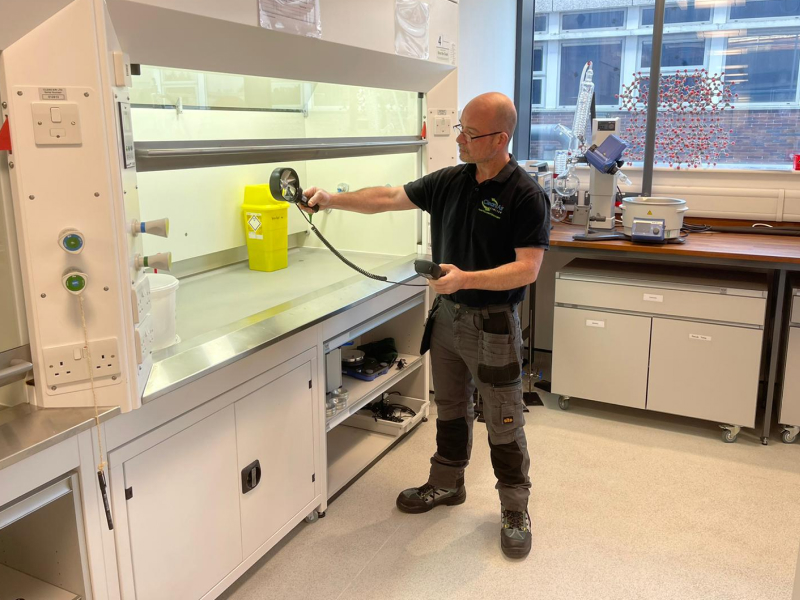

Sulphur hexafluoride (SF₆) is the most potent and damaging greenhouse gas with a Global Warming Potential 24,300 times greater than CO₂ over 100 years. It is traditionally used as a tracer gas when type testing fume cupboards for containment, meaning even relatively small releases can have a significant climate impact.
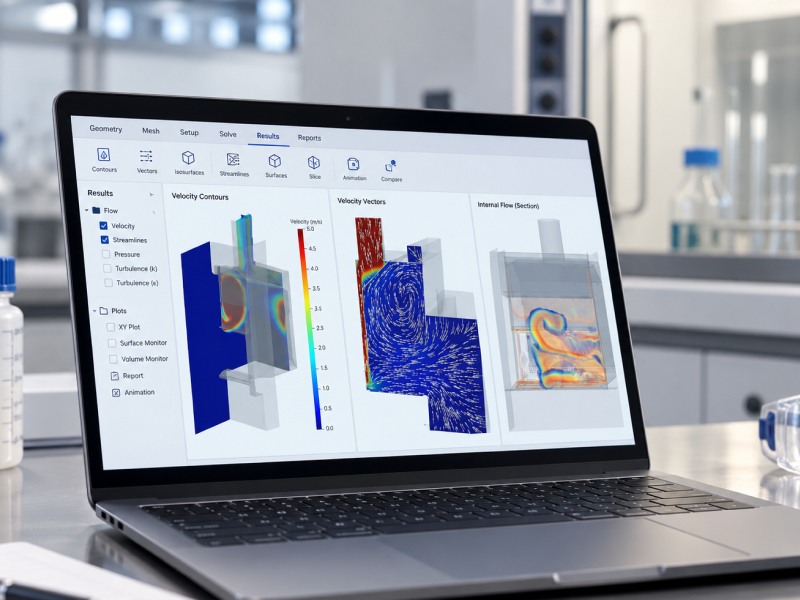

Computational Fluid Dynamics (CFD) allows airflow and containment to be modelled virtually, reducing the need for physical prototypes and SF₆-based testing where technically appropriate. Clean Air has developed and validated its own specialist CFD capability for fume cupboard design, development, testing and consultancy.
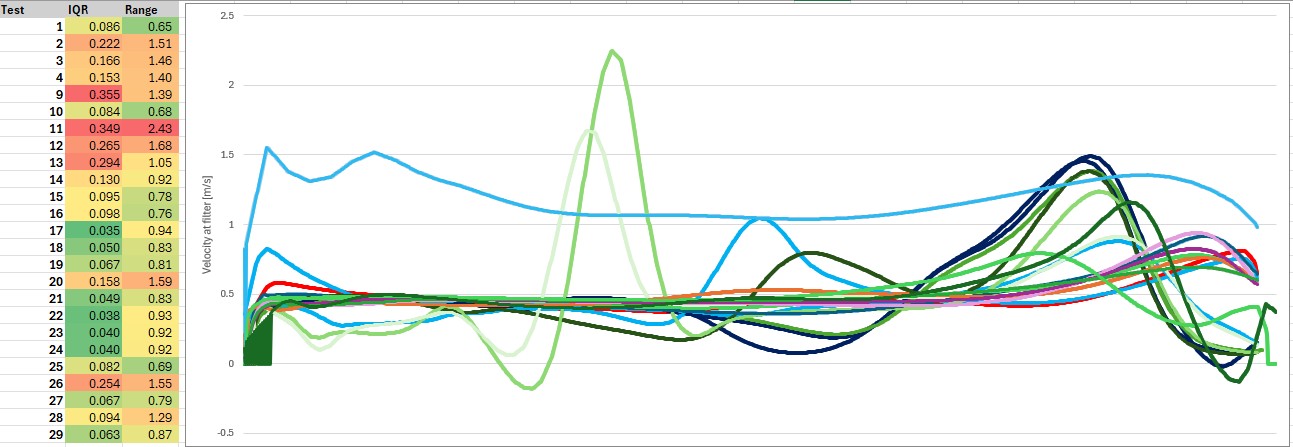

We use CFD in eligible design, R&D and consultancy work to reduce physical prototyping and unnecessary SF₆ use, while retaining physical testing where it is required. Our 2030 objective is to eliminate avoidable SF₆ use across eligible design and testing activities.
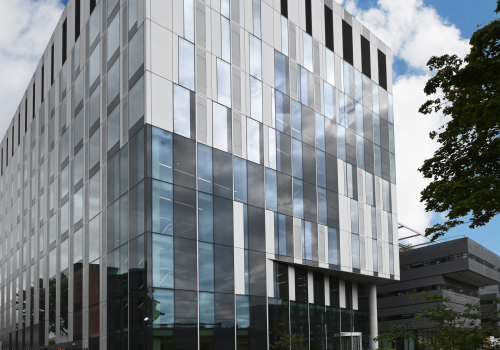

Our CFD capability was developed and validated through a Knowledge Transfer Partnership with Manchester Metropolitan University and Innovate UK. We retained that specialist expertise within Clean Air, where it now supports product development, testing, R&D and consultancy.


Clean Air is the only fume cupboard manufacturer currently able to offer on-site SF₆-free testing using our CFD-supported FlowChex approach, extending lower-impact testing into customers’ laboratories.


Between January 2022 and September 2026, our recorded CFD work avoided an estimated 939 tonnes CO₂e of SF₆ emissions across containment assessment, R&D, product development and engineering consultancy.
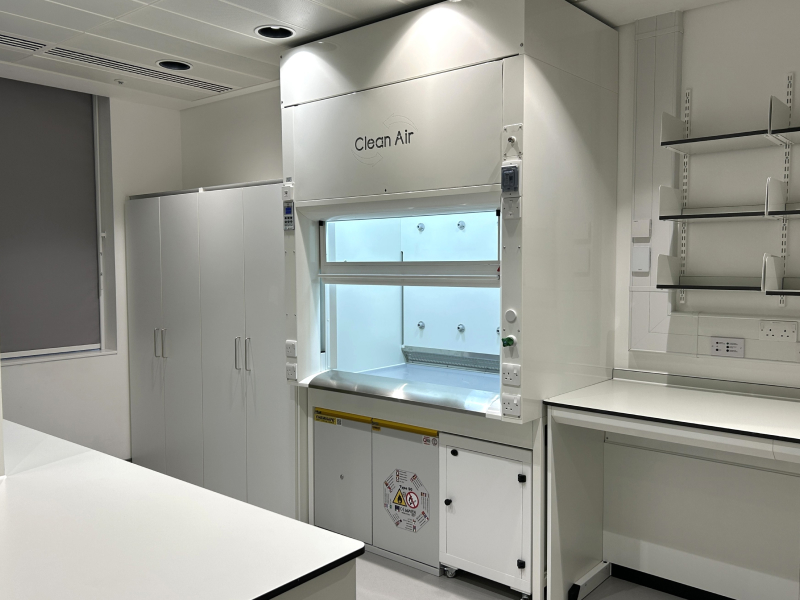

Aerodynamic design, Variable Air Volume systems and automatic sash controls can significantly reduce the amount of conditioned laboratory air being unnecessarily extracted. Good specification and good user behaviour work together to maximise the benefit.


Computational fluid dynamics (CFD) allows us to analyse airflow at millions of points, revealing far more detail than traditional physical type testing alone. This insight helps us optimise our designs, enhance containment and develop safer fume cupboards.
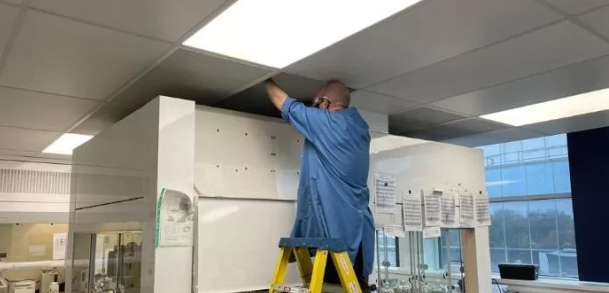

Our servicing, repair, refurbishment and retrofit services help keep fume cupboards safely in use for longer. Upgrades including VAV, automatic sash controls and modern control systems can also improve the performance of existing equipment.
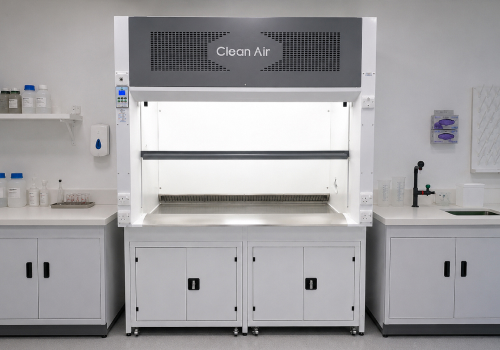

Our recirculating filtration cabinets have been redesigned to extend filter life and include a setback mode that reduces energy consumption when the sash is closed.
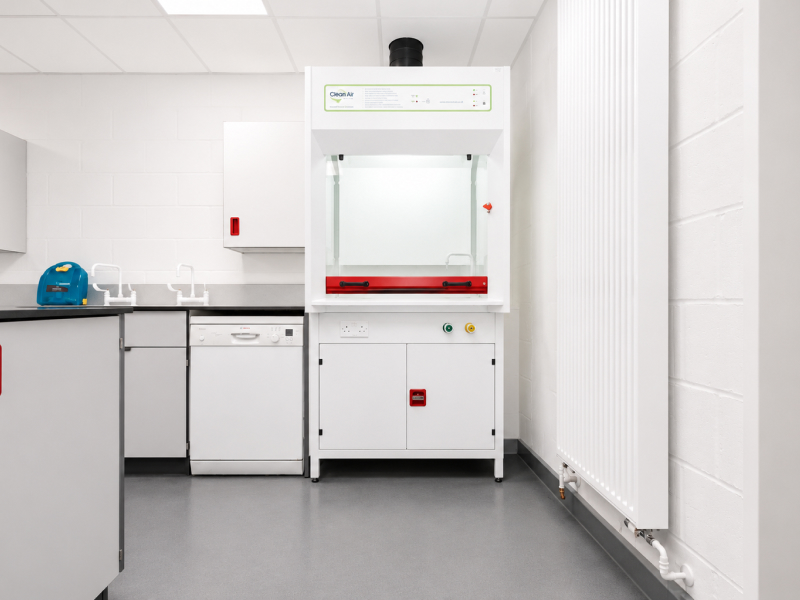

We’re working to minimise material use and consider how products can eventually be dismantled and separated. For example, dissimilar materials are mechanically fixed rather than bonded wherever appropriate to make future separation easier.


We have developed practical guidance to help customers consider decontamination, reuse, resale, recycling and responsible disposal when fume cupboards reach the end of their working lives.
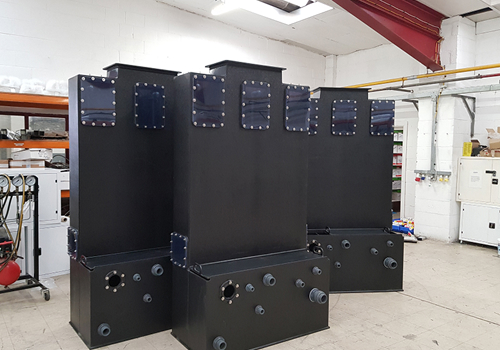

We design and manufacture fume scrubbers as part of complete fume cupboard and extract systems, helping treat suitable hazardous or corrosive process fumes before they are discharged to atmosphere.


Our work to reduce the environmental impact of laboratory containment has received the 2024 LAB Awards Best Sustainable Innovation award and the 2025 LabMate Excellence Awards Green Lab Award for Best Sustainability Initiative.


We have measured our operational carbon emissions since 2017 and follow a reduction-before-compensation approach. Our 2026-2030 Sustainability Strategy sets out how we will continue reducing our environmental impact and measuring progress.


Our solar PV system generated 44,000 kWh during 2025 compared with 10,400 kWh imported from the grid. During the same period, we exported 19,000 kWh of renewable electricity.


We have invested in LED lighting, roof insulation, efficient heating controls and better equipment management to reduce energy demand across our offices and manufacturing facilities.
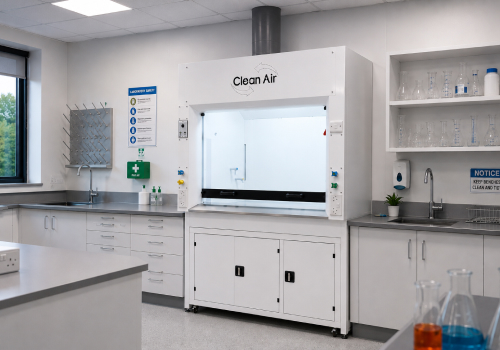

We’re working with our waste contractors to better understand how our waste is managed, including how much is recycled and how much is used for energy recovery. This will help us identify practical ways to reduce waste and improve recycling across our operations.

Computer-controlled manufacturing helps us optimise material use and minimise waste. We also reuse packaging where practical, reduce paper through digital systems and use recycled paper products.


Our company-car fleet is moving to fully electric vehicles, with our final hybrid car leaving the business in November 2026. We continue to assess electric alternatives for service and installation vehicles where range and payload requirements allow.


Route planning, remote meetings, subsidised employee EV charging and the Cycle to Work Scheme all help reduce the environmental impact of business and commuter travel.


Since 2021 we have supported FSC-certified UK forestry, funded 1,000 native UK saplings through Plant a Tree in ’23 and introduced planting around our site to support pollinators and local biodiversity.






Our values were developed with the Clean Air team: Safety and wellbeing, Technical integrity, Innovation, Customer commitment and Lasting value. They reflect how we want to treat our people, support our customers and make responsible decisions.


Our Managing Director sponsors our Sustainability Strategy, supported by senior leaders responsible for technical evidence, environmental performance, finance, operations and communications. Sustainability is built into normal business decision-making rather than managed as a separate activity.


Environmental matters are a standing item at weekly Senior Leadership Team meetings, with our ESG Risk Register reviewed every two months. Our cross-functional Environmental Committee meets quarterly to review performance, risks, claims and priority actions.


Our ESG Risk Register gives identified risks an owner, rating, controls, mitigation and next action. Climate and sustainability risks are also reviewed through leadership meetings and our Environmental Committee.

Our management systems are certified to ISO 9001 for quality, ISO 14001 for environmental management and ISO 45001 for occupational health and safety.

Our Supplier Standards set expectations around legal compliance, human rights, fair treatment, safe working, ethical conduct and environmental responsibility. We work constructively with suppliers to understand and address gaps where improvement is needed.
Significant environmental claims are checked against the relevant technical, financial or operational evidence before publication. Our Environmental Claims Register helps us keep sustainability communications accurate and properly supported.
Our 2026-2030 Sustainability Strategy tracks six areas: SF₆ and CFD, carbon and energy, customers and products, resources and value chain, people and community, and governance and claims. Progress is reviewed regularly, with an annual strategy review and formal mid-point review in 2028.

Cyber Essentials certification supports our approach to protecting business, customer and commercially sensitive information.
At Clean Air, environmental responsibility, social wellbeing and strong governance are fundamental to how we operate. From developing innovative technologies that reduce environmental impact to supporting our people and maintaining the highest standards of responsible business, we’re committed to making a meaningful difference.
Our work doesn’t stop here. Through continued investment, collaboration and measurable improvements, we’re working towards a safer, more sustainable future for our business, our customers and the wider laboratory community.
Social
Supporting Our People
More Time to Rest & Recharge
We give our team time to rest and recharge with 6.6 weeks of paid annual leave each year. That’s 33 days, including public holidays, for employees working five days a week, giving everyone a full week more than the statutory minimum.
Flexible support & phased retirement
We offer flexible working, individual workplace adjustments and phased retirement where appropriate, helping our people balance work with changing circumstances.
Giving our people a voice
Our cross-departmental Team Forum gives representatives from across the business direct access to our Managing Director to raise concerns, suggest improvements and influence company priorities.
Developing skills & knowledge
We invest in role-specific training, regular Knowledge Shares, CPD and professional registration, helping our people develop their expertise and share it with others. We also participate in wider sustainability learning through programmes including My Green Lab and the Supply Chain Sustainability School.
Fair treatment and inclusion
We promote equal opportunities, inclusive recruitment and fair treatment, alongside individual adjustments and flexible working that help people participate fully at work.
Supporting wellbeing
All team members receive company-funded life assurance, including access to a 24/7 GP service and lifestyle, mental health and wellbeing support. Regular social activities and practical employee benefits also help support team connection and work-life balance.
Supporting Our Communities & Sharing Knowledge
Recruiting and buying locally
We recruit locally wherever possible and work with North West and UK suppliers, supporting employment, skills and economic activity closer to our business.
A community defibrillator
We maintain a publicly accessible defibrillator at our premises, registered with The Circuit for use by the wider community.
Accredited CPD
Our accredited CPD helps laboratory professionals, architects and engineers make safer, more sustainable decisions about fume cupboard specification and operation. By September 2026 we had already delivered this training to 243 industry professionals.
Free practical guidance and tools
We provide free resources including our online VAV calculator and practical guidance on sash management, VAV, automatic sash controls, SF₆ reduction and the appropriate use of CFD.
Sharing our research
Our CFD methodology has been published and remains unpatented so that others can scrutinise, understand and build on the work. We also contribute to BSI, CEN and ISO standards activity and engage with industry and policymakers to encourage responsible progress away from SF₆.
Supporting our professional community
We contribute to organisations and initiatives including UKSPA, I2SL, Shut the Sash and My Green Lab, and provide company time for colleagues to participate in professional organisations and standards work.
Improving access to laboratories
We design and manufacture height-adjustable and accessible fume cupboards to support safer, more independent laboratory use by wheelchair users and people with reduced mobility.