100+
Clean Air units supplied across Royce facilities
Protecting safety-critical fume cupboard operation through expert extract system diagnosis, redesign and repair
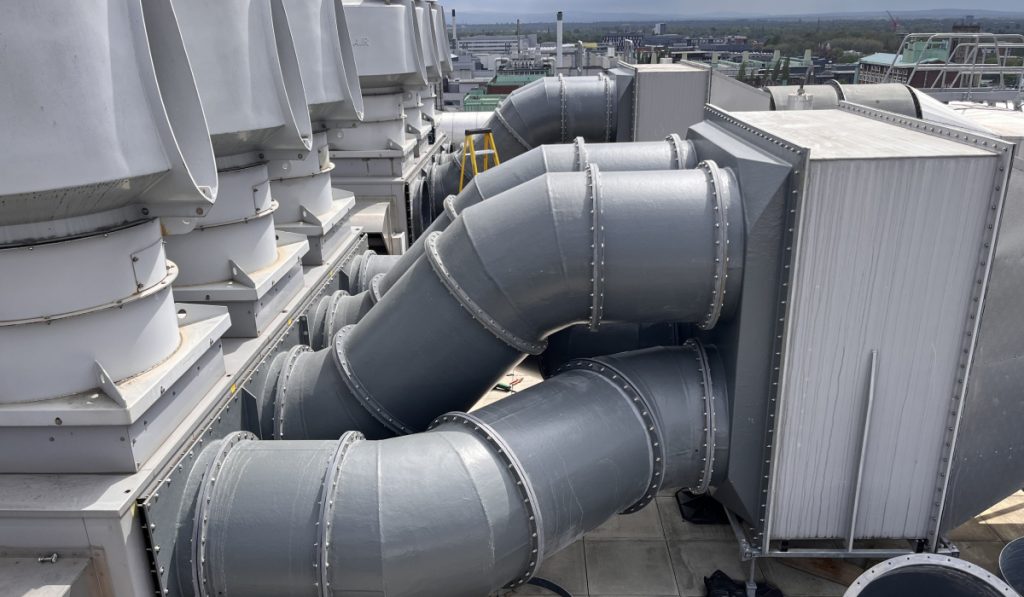
Clean Air was asked to review and support remediation of roof-level ductwork serving a major fume cupboard installation at the Henry Royce Institute Hub Building.
| Client | Henry Royce Institute / University of Manchester | Project | Sir Henry Royce Institute Hub Building ductwork remediation |
| Location | Manchester | Sector | Advanced materials, higher education and research |
| Clean Air Relationship | More than 100 fume cupboards and ventilated enclosures supplied across Royce facilities | Clean Air Scope | Survey, diagnosis, technical advice, redesign and remediation support for failed fume cupboard extract ductwork |
100+
Clean Air units supplied across Royce facilities
67
VAV High-Performance Radius Profile fume cupboards previously supplied at the Hub Building
2
walk-in enclosures previously supplied at the Hub Building
69
Clean Air fume cupboards potentially affected by extract system disruption
Henry Royce Institute Project Background
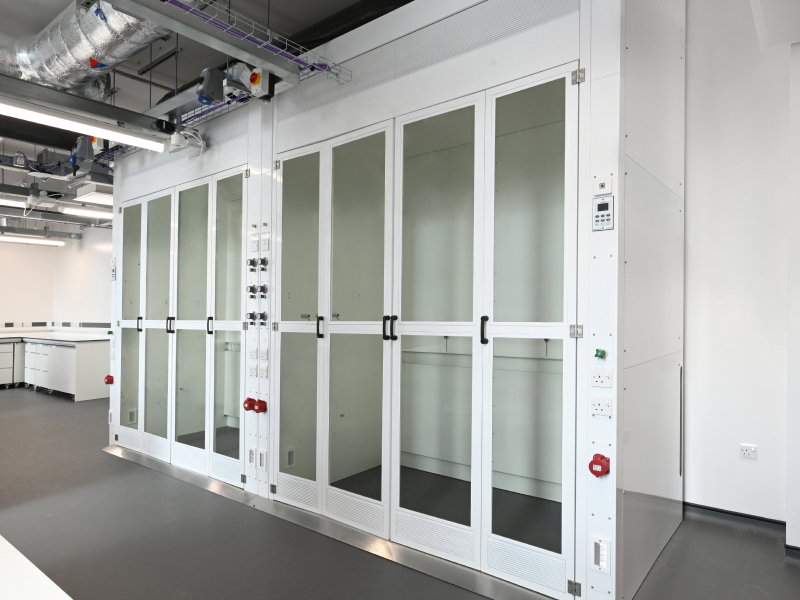
Clean Air has a long-standing relationship with the Henry Royce Institute, the UK national institute for advanced materials research and innovation. Across Royce facilities in England, Clean Air has supplied more than 100 fume cupboards and ventilated enclosures to support demanding research environments.
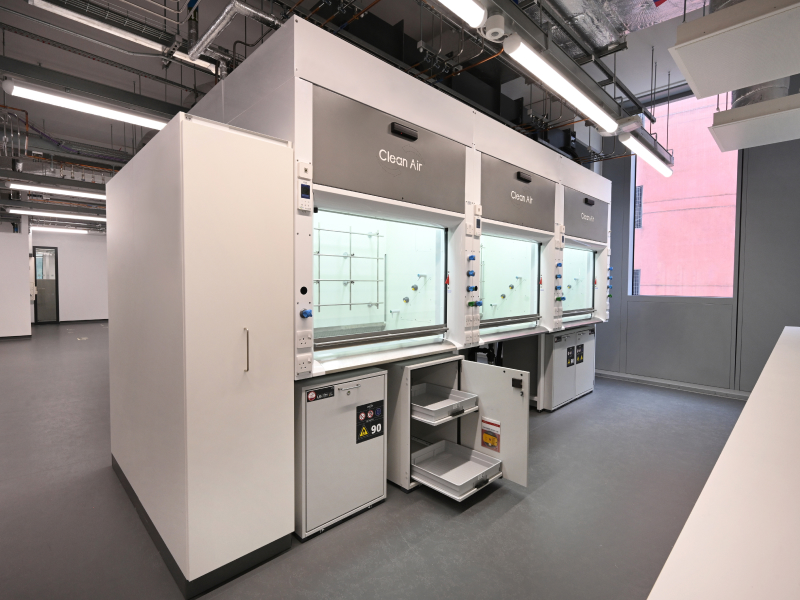
At the Henry Royce Institute Hub Building at The University of Manchester, Clean Air previously supplied 67 VAV High-Performance Radius Profile fume cupboards and two walk-in enclosures across the building. Further work included additional walk-in fume cupboards, relocation, installation and commissioning support as the facility continued to develop.
Although Clean Air supplied the fume cupboards, the roof-level ductwork package was supplied by others. After failures were identified within the extract system, Clean Air was asked to review the issues and support the remediation of the ductwork serving the fume cupboard installation.
Challenge and Importance
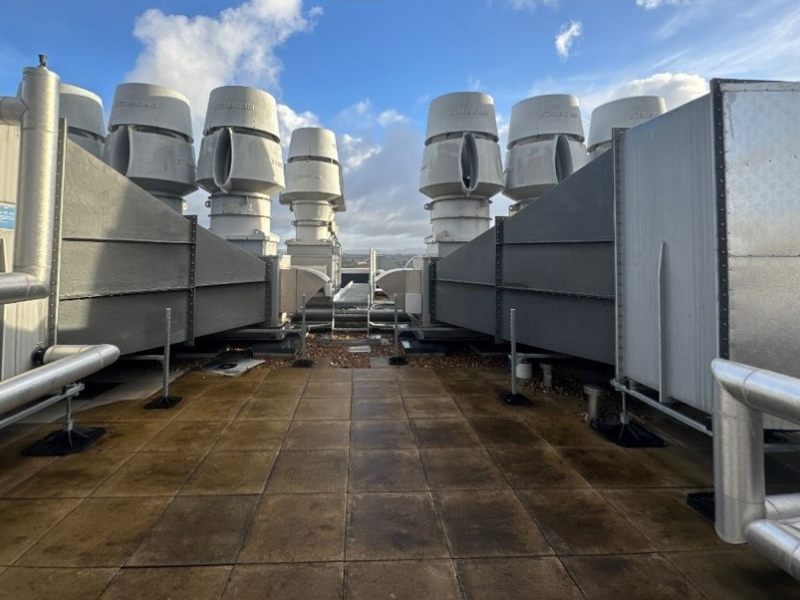
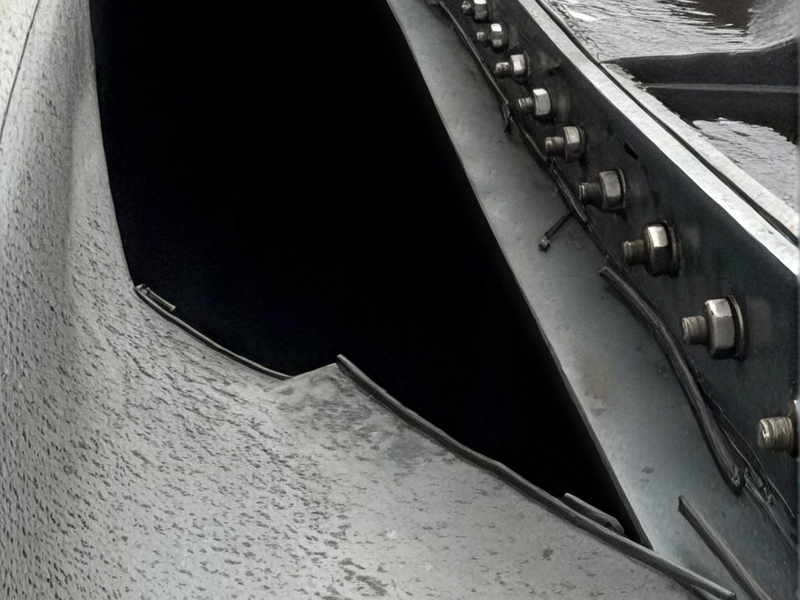
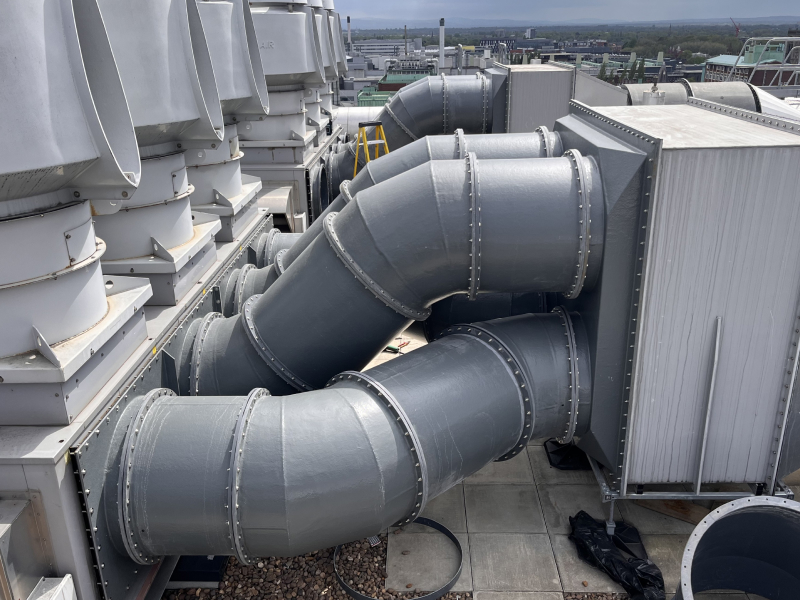
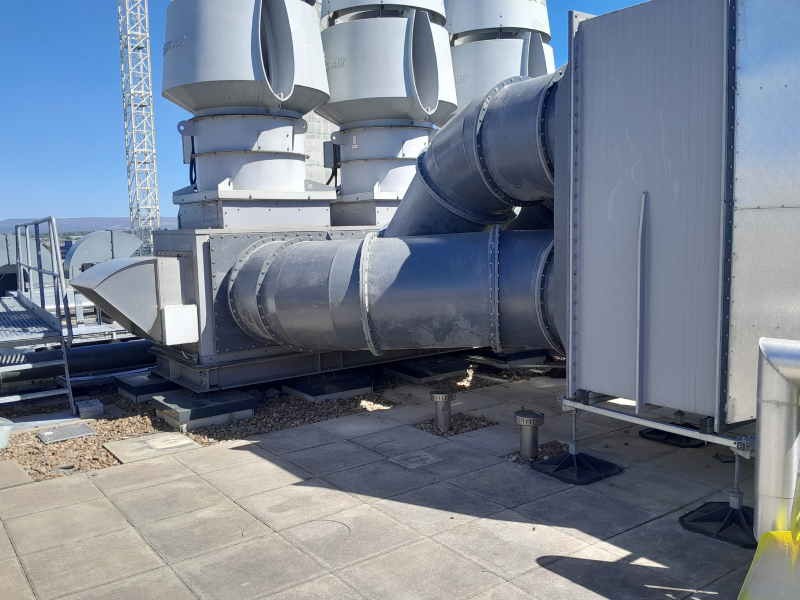
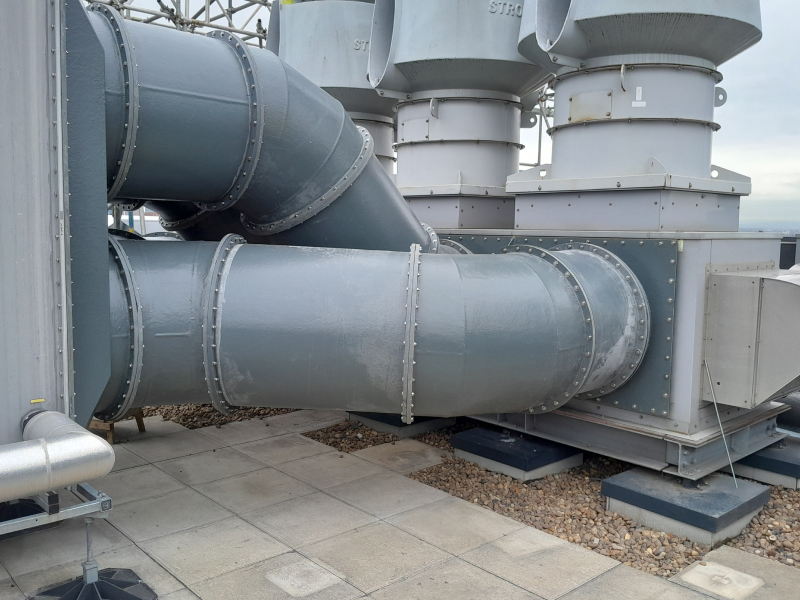
The extract ductwork serving Stack 001 North and Stack 002 South had developed significant failures. The initial survey recorded visible damage at roof level, including failed flexible connections to the strobic fan unit welds, flange weld failure, internal strengthening supports breaking through the bottom of the ductwork, a lack of support below sections of the ductwork, corner failures, and GRP delaminating from the PVC ductwork.
The university’s estates team were quick to identify the problems and request a solution before the safety of the system was compromised.
The nature and extent of the failures indicated wider issues with the design, manufacture and installation of the ductwork system. For a safety-critical fume cupboard extract system, this was a serious concern. The findings also indicated that parts of the rectangular ductwork and stiffening arrangement did not meet the expectations of DW154, the BESA Specification for Plastics Ductwork.
Ductwork must be correctly specified, fabricated, supported and installed to maintain reliable extract performance and protect containment.
Without urgent attention, the performance of the fume cupboard system could have been affected, creating a significant operational risk for the university and the researchers relying on the facility. The issue was not simply a ductwork repair. It required specialist understanding of how fume cupboards, ductwork and fan systems work together to maintain safe laboratory conditions.
Why Fume Cupboard Extract Ductwork Integrity Matters?
Fume cupboards are safety-critical laboratory systems. Their performance relies not only on the cupboard itself, but on the extract system behind it. Ductwork design, manufacture, support, installation and commissioning all influence safe, reliable containment.
A compromised extract system can affect containment, laboratory availability, research continuity, safety assurance and confidence in the wider system. At a high-profile advanced materials facility, the response needed to be technically robust, fast and grounded in specialist fume cupboard and ductwork expertise.
Our Delivery Approach
Clean Air followed a clear, evidence-led process to understand the failures, assess their potential impact and define the remedial work required. Combining detailed site inspection with specialist knowledge of fume cupboard performance and laboratory extract systems, the team helped establish a practical route from initial investigation through to repair and system reassurance.
A site survey and technical review of the failed roof-level ductwork identified the key defects and visible failure points.
Clean Air considered the likely impact on fume cupboard operation and the risks to safety-critical laboratory extract performance.
Clean Air advised on and undertook the redesign, repair and strengthening needed to restore confidence to the extract system.

Clean Air’s Specialist Ductwork Remediation Solution
Clean Air reviewed the system, assessed the visible failures and identified the likely causes and risks. We then provided specialist advice on how the ductwork should be redesigned to support reliable fume cupboard extract performance and meet DW154.
The work drew on Clean Air’s experience designing, manufacturing and installing ductwork systems that complement fume cupboards and support safe containment.
The work required close attention to the relationship between the fume cupboards, the ductwork and the fan system, rather than treating the ductwork as an isolated building services issue.
Protecting Laboratory and Research Continuity
Clean Air advised the client on the causes and severity of the ductwork failures and supported the development of a technically appropriate remediation plan.
The intervention helped protect the availability of the fume cupboards and reduced the risk of significant disruption to research activity at the Henry Royce Institute Hub Building.
The project also demonstrated the value of working with a fume cupboard specialist who understands the full containment system, from the working chamber through to the extract discharge.
Supporting Sustainability and System Efficiency
The previous Clean Air fume cupboard installation included VAV technology, helping the facility reduce extract volumes and energy demand while maintaining safe containment.
By supporting targeted remediation of the extract system, Clean Air helped the client focus on restoring safe, reliable performance and protecting the value of the existing fume cupboard installation.
Strengthening Compliance and System Assurance
This case highlights the importance of ductwork being designed, fabricated and installed in line with the appropriate plastics ductwork specification. For fume cupboard systems, compliance and assurance must cover the whole extract pathway, not just the fume cupboard at the point of use.
Clean Air’s recommendations were informed by relevant standards, practical fume cupboard experience and the need to maintain safe operation in a demanding laboratory environment.
A fume cupboard is only as reliable as the extract system that supports it.
Speak to Clean Air About Your Laboratory Project
Clean Air designs, manufactures, installs, and maintains fume cupboards and extract systems for education, research, healthcare, commercial, industrial and specialist laboratory environments. Whether you need a new fume cupboard installation, ductwork remediation, extract system advice, or support for an existing laboratory, Clean Air can help protect safety, performance, and continuity. Get in touch today and see how we can help.